Mad Of Electronics

Here u can find some useful tips and links related to troubleshooting electronic appliances

HUNGER FACTS

Posted by rajascientist Tuesday, August 4, 2009 0 comments

Give free food with one click. Visit http://www.bhookh.com/


1.
Hunger remains the No.1 cause of death in the world. Aids, Cancer etc. follow.

2.
There are 820 million chronically hungry people in the world.

3.
1/3rd of the world’s hungry live in India.

4.
836 million Indians survive on less than Rs. 20 (less than half-a-dollar) a day.

5.
Over 20 crore Indians will sleep hungry tonight.

6.
10 million people die every year of chronic hunger and hunger-related diseases. Only eight percent are the victims of hunger caused by high-profile earthquakes, floods, droughts and wars.

7.
India has 212 million undernourished people – only marginally below the 215 million estimated for 1990–92.

8.
99% of the 1000 Adivasi households from 40 villages in the two states, who comprised the total sample, experienced chronic hunger (unable to get two square meals, or at least one square meal and one poor/partial meal, on even one day in the week prior to the survey). Almost as many (24.1 per cent) had lived in conditions of semi-starvation during the previous month.

9.
Over 7000 Indians die of hunger every day.

10.
Over 25 lakh Indians die of hunger every year.

11.
Despite substantial improvement in health since independence and a growth rate of 8 percent in recent years, under-nutrition remains a silent emergency in India, with almost 50 percent of Indian children underweight and more than 70 percent of the women and children with serious nutritional deficiencies as anemia.

12.
The 1998 – 99 Indian survey shows 57 percent of the children aged 0 – 3 years to be either severely or moderately stunted and/or underweight.

13.
During 2006 – 2007, malnutrition contributed to seven million Indian children dying, nearly two million before the age of one.

14.
30% of newborn are of low birth weight, 56% of married women are anaemic and 79% of children age 6-35 months are anaemic.

15.
The number of hungry people in India is always more than the number of people below official poverty line (while around 37% of rural households were below the poverty line in 1993-94, 80% of households suffered under nutrition).

Sources :

UN World Food Programme
UN World Health Organization: Global Database on Child Growth and Malnutrition, 2006
UN Food and Agriculture Organization: SOFI 2006 Report
National Commission for Enterprises in the Unorganized Sector (India)
National Family Health Survey 2005 – 06 (NFHS-3) (India)
Centre for Environment and Food Security (India)
Rural 21 (India)

HUMAN AS A BATTERY

Posted by rajascientist Monday, August 3, 2009 0 comments

Electrical impulses in the heart originate in the sinoatrial node and travel through the intrinsic conducting system to the heart muscle.The impulses stimulate the myocardial muscle fibres to contract and thus induce systole. The electrical waves can be measured at selectively placed electrodes (electrical contacts) on the skin.


These small electrical signals can be measured using a multimeter. Adjusting the multimeter to 200 or 2000mv dc the electrical signal produced can be measured. The strength of this signal vary from point to point ,that can be understood by touching multimeter electrode at different places on our skin.

When i measured my own body signals i got around 125 mv sometimes, suddenly i an idea flashed me i thought of amplifying this voltage to produce around 1 volt so that i can light some small bulb.

So now how to amplify , thought for a while then one thing struk my mind thats the voltage multiplier .


A voltage multiplier is an electrical circuit that converts AC electrical power from a lower voltage to a higher DC voltage by means of capacitors and diodes combined into a network. Voltage multipliers can be used to generate bias voltages of a few volts or tens of volts or millions of volts for purposes such as high-energy physics experiments and lightning safety testing.


The above circuit is an example of typical voltage quadrupler a type of voltage multiplier,


I used around 10 capacitors and diodes that is output volt is 10 times the input voltage. The circuit is in process I will tell u later whether I succeeded in lighting a small bulb.


PUBLIC GRIEVANCES

Posted by rajascientist Sunday, August 2, 2009 0 comments

Government of India has an online Grievance forum at http://www.pgportal.gov.in

Can you imagine this is happening in INDIA ?

The govt. wants people to use this tool to highlight the problems they faced while dealing with Government officials or departments like

11) National Saving Scheme of Ministry of Finance
19) Central Universities
20) ESI Hospitals and Dispensaries directly controlled by ESI Corporation under Ministry of Labour

Many of us say that these things don't work in India .
Couple of months back, the Faridabad Municipal Corporation laid new roads in his area and the residents were very happy about it. But 2 weeks later, BSNL dug up the newly laid roads to install new cables which annoyed all the residents.. A resident used the above listed grievance forum to highlight his concern.. To his surprise, BSNL and Municipal Corporation of Faridabad were served a show cause notice and the guy received a copy of the notice in one week. Government has asked the MC and BSNL about the goof up as it's clear that both the government departments were not in sync at all.

So use this grievance forum and educate others who don't know about this facility.
This way we can at least raise our concerns instead of just talking about the 'System' in India .

CRYSTAL RADIO

Posted by rajascientist 0 comments

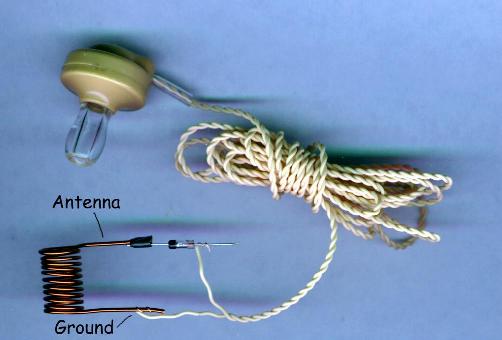
A crystal radio is the distilled essence of a radio. It has very few parts, it needs no batteries or other power source, and it can be built in a short time out of things you can find around the house.


The reason a crystal radio does not need any batteries is the amazing capabilities of the human ear. The ear is extremely sensitive to very faint sounds. The crystal radio uses only the energy of the radio waves sent by radio transmitters. These radio transmitters send out enormous amounts of energy (tens of thousands of watts). However, because they are usually far away, and we have at most a few hundred feet of wire for an antenna, the amount of energy we receive with the crystal radio is measured in billionths of a watt. The human ear can detect sounds that are less than a millionth of even that.


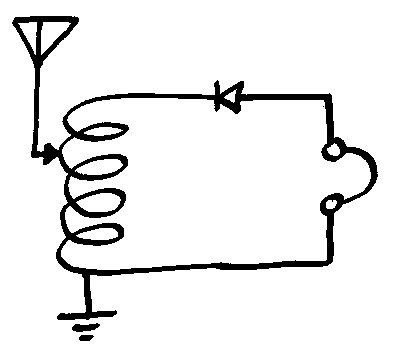
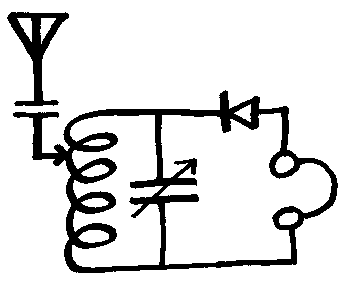
The above circuit shows a simple crystal radio. U can also add some capacitors to the above circuit, a capacitor in series with the antenna coil allows high frequency to pass through enabling better performance and reception.


Instead of ear phone u can also use a telephone receiver to listen to channels.

Eye Safety During Solar Eclipses

Posted by rajascientist Wednesday, July 22, 2009 0 comments

The Sun can be viewed safely with the naked eye only during the few brief seconds or minutes of a total solar eclipse. Partial eclipses, annular eclipses, and the partial phases of total eclipses are never safe to watch without taking special precautions. Even when 99% of the Sun's surface is obscured during the partial phases of a total eclipse, the remaining photospheric crescent is intensely bright and cannot be viewed safely without eye protection [Chou, 1981; Marsh, 1982]. Do not attempt to observe the partial or annular phases of any eclipse with the naked eye. Failure to use appropriate filtration may result in permanent eye damage or blindness!


Generally, the same equipment, techniques and precautions used to observe the Sun outside of eclipse are required for annular eclipses and the partial phases of total eclipses [Reynolds & Sweetsir, 1995; Pasachoff & Covington, 1993; Pasachoff & Menzel, 1992; Sherrod, 1981]. The safest and most inexpensive of these methods is by projection, in which a pinhole or small opening is used to cast the image of the Sun on a screen placed a half-meter or more beyond the opening. Projected images of the Sun may even be seen on the ground in the small openings created by interlacing fingers, or in the dappled sunlight beneath a leafy tree. Binoculars can also be used to project a magnified image of the Sun on a white card, but you must avoid the temptation of using these instruments for direct viewing.
The Sun can be viewed directly only when using filters specifically designed for this purpose. Such filters usually have a thin layer of aluminum, chromium or silver deposited on their surfaces that attenuates ultraviolet, visible, and infrared energy. One of the most widely available filters for safe solar viewing is a number 14 welder's glass, available through welding supply outlets. More recently, aluminized mylar has become a popular, inexpensive alternative. Mylar can easily be cut with scissors and adapted to any kind of box or viewing device. A number of sources for solar filters are listed below. No filter is safe to use with any optical device (i.e. - telescope, binoculars, etc.) unless it has been specifically designed for that purpose. Experienced amateur and professional astronomers may also use one or two layers of completely exposed and fully developed black-and-white film, provided the film contains a silver emulsion. Since all developed color films lack silver, they are always unsafe for use in solar viewing.
Unsafe filters include color film, some non-silver black and white film, medical x-ray films with images on them, smoked glass, photographic neutral density filters and polarizing filters. Solar filters designed to thread into eyepieces which are often sold with inexpensive telescopes are also dangerous. They should not be used for viewing the Sun at any time since they often crack from overheating. Do not experiment with other filters unless you are certain that they are safe. Damage to the eyes comes predominantly from invisible infrared wavelengths. The fact that the Sun appears dark in a filter or that you feel no discomfort does not guarantee that your eyes are safe. Avoid all unnecessary risks. Your local planetarium or amateur astronomy club is a good source for additional information.
In spite of these precautions, the total phase of an eclipse can and should be viewed without any filters whatsoever. The naked eye view of totality is completely safe and is overwhelmingly awe-inspiring!

PEE POWER: URINE TO FUEL CARS

Posted by rajascientist Wednesday, July 8, 2009 0 comments


Before you next flush the toilet, consider this: Scientists in Singapore have developed a battery powered by urine.
Researchers at the Institute of Bioengineering and Nanotechnology created the credit card-size battery as a disposable power source for medical test kits.
Urine Power
To make the battery, Lee and his colleagues soaked a piece of paper in a solution of copper chloride and sandwiched it between strips of magnesium and copper. This sandwich was then laminated between two sheets of transparent plastic.
When a drop of urine is added to the paper through a slit in the plastic, a chemical reaction takes place that produces electricity, Lee said.
The prototype battery produced about 1.5 volts, the same as a standard AA battery, and runs for about 90 minutes. Researchers said the power, voltage, and lifetime of the battery can be improved by adjusting the geometry and materials used.
Scientist have combined refuelling your car and relieving yourself by creating a new catalyst that can extract hydrogen from urine

The catalyst could not only fuel the hydrogen-powered cars of the future, but could also help clean up municipal wastewater, physorg.com reported on Monday.

Gerardine Botte of Ohio University uses an electrolytic approach to produce hydrogen from urine — the most abundant waste on earth — at a fraction of the cost of producing hydrogen from water.

Urine’s major constituent is urea, which incorporates four hydrogen atoms per molecule — importantly, less tightly bonded than the hydrogen atoms in water molecules.
Botte uses electrolysis to break the molecule apart, developing an inexpensive nickel-based electrode to efficiently oxidise the urea.

To break the molecule down, a voltage of 0.37V needs to be applied across the cell, which is much less than the 1.23V needed to split water.

“During the electrochemical process the urea gets adsorbed on to the nickel electrode surface, which passes the electrons needed to break up the molecule,” Botte told Chemistry World journal.

Search This Blog

Share

Share |